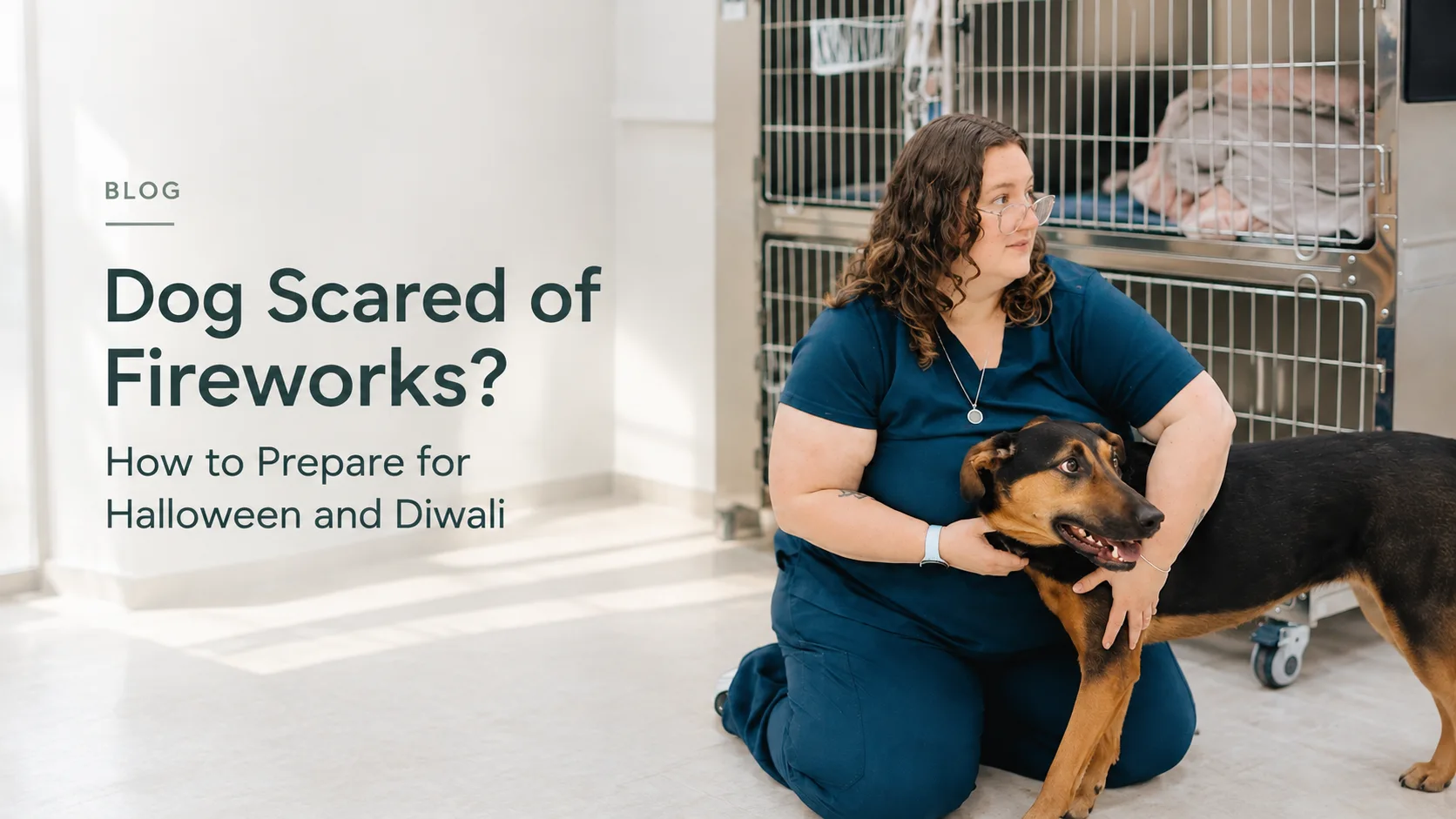
Dog Scared of Fireworks? How to Prepare for Halloween and Diwali
- By Dr Sam DVM
If your dog is scared of fireworks, create a quiet indoor space, reduce noise, and stay nearby to help them feel safe. In Surrey, fireworks can continue for days around Halloween on October 31 and Diwali on November 8, 2026. Dogs that are frightened by loud noises may shake, pant, hide or try to escape. The BC SPCA estimates that about half of dogs are fearful of loud noises like fireworks.
Preparing early can make a real difference, whether you live in Surrey, Cloverdale, Fleetwood or Langley Township.
"Why Is My Dog Scared of Fireworks?"
Fireworks are loud, sudden and unpredictable. Dogs hear sounds differently from humans, and the unexpected bangs and flashes can trigger a fear response.
Some dogs have always been sensitive to loud noises, while others develop greater fear as they get older or after a frightening experience.
Fireworks anxiety isn’t bad behaviour, and you should never punish your dog for being scared. They need reassurance and a safe environment.
“Signs Your Dog Is Scared of Fireworks”
Dogs react differently to loud noises. Common signs of fireworks anxiety include:
- Trembling or shaking.
- Panting or drooling when it isn’t hot.
- Pacing, whining or barking.
- Hiding under furniture or behind objects.
- Clinging to you or trying to escape.
- Having accidents inside the house.
- Refusing food or treats.
If your dog shows these signs every fireworks season, speak to your veterinarian about suitable ways to manage their fear.
“How to Prepare Your Dog for Fireworks”
Start preparing around two weeks before the first expected fireworks night.
- Create a safe space. Choose a quiet room away from windows. Add a comfortable bed, familiar blanket and fresh water. Let your dog use this space daily so it feels safe when fireworks begin.
- Use background noise. Play the television, radio or white noise at a comfortable volume to help soften sudden bangs.
- Check identification. Keep your dog’s collar and ID tags up to date, and make sure their microchip details are current.
- Secure your home. Check fences, gates, doors and window screens for gaps. Frightened dogs can escape through spaces they would normally ignore.
- Maintain a routine. Keep meal times, walks and rest periods as consistent as possible.
- Speak to your vet early. If your dog experiences severe anxiety, your veterinarian may recommend medication or behaviour training. Some options need to be discussed and tested before fireworks night.
"How to Calm a Dog During Fireworks"
Even with preparation, your dog may become frightened when the noise starts. These steps can help:
- Walk your dog before dark and keep them securely on a leash.
- Close windows, doors and curtains to reduce noise and flashes.
- Turn on familiar background sounds.
- Let your dog hide if they want to. Never force them out of their safe space.
- Stay calm and offer reassurance. Comforting your dog does not make their fear worse.
- Offer a long-lasting chew or food puzzle if they’re willing to eat.
- Never leave a frightened dog outside or tied up.
- Keep your dog at home during fireworks displays and trick-or-treating.
If you’re walking your dog in Surrey, Cloverdale or Fleetwood, finish the walk early and use a secure leash and well-fitted collar or harness.
"Is My Cat Scared of Fireworks? "
Cats can experience fireworks anxiety too. They may hide, flatten their ears, refuse to come out or stop eating.
Keep cats indoors throughout fireworks season. Provide hiding places both up high and down low, and keep their litter box, food and water nearby. Close windows and cat flaps, and never force a frightened cat out of its hiding spot.
"What to Do If Your Dog Runs Away During Fireworks"
A frightened dog may run much farther than expected. If your dog escapes, act quickly:
- Search close to home first, as frightened dogs may hide nearby.
- Contact local animal control and nearby veterinary clinics in Surrey or Langley.
- Report your dog missing to their microchip registry.
- Share a recent photo and details in local lost-pet and community groups.
- Ask neighbours to check garages, sheds and sheltered areas.
Keep your dog’s identification details current before fireworks season begins.
Veterinary Support for Fireworks Anxiety in Surrey
If your dog experiences severe fireworks anxiety, a veterinary appointment can help you prepare before Halloween and Diwali. Mascot Animal Hospital is a locally owned veterinary clinic at 17767 64 Ave, #109, Surrey, BC V3S 1Z2, providing veterinary care for dogs and cats.
The clinic welcomes pet owners from Surrey and nearby communities, including Cloverdale, Fleetwood, Langley Township, Walnut Grove and Willoughby. It is open daily from 8 am to 11 pm.
If your dog has a history of panic, escape attempts or severe reactions to loud noises, book a visit in advance. This gives you time to discuss your dog’s symptoms and suitable treatment options with the veterinary team.
Related reading: My Dog Ate Chocolate: What to Do Right Now
Frequently Asked Questions
Should I give my dog calming products from the pet store?
Speak to your veterinarian first. The right option depends on your dog’s health and the severity of their fear.
Can I give my dog human anxiety medication?
No. Some human medications are dangerous to dogs. Only give medication prescribed or specifically approved by your veterinarian.
Does comforting my dog make fireworks fear worse?
No. Staying calm and offering reassurance won’t reinforce the emotion of fear. Avoid punishment or forcing your dog to face the noise.
Will my dog get used to fireworks?
Some dogs improve with gradual sound training, but others need additional support. Ask your vet about a longer-term behaviour plan after fireworks season.
How early should I start preparing my dog for fireworks?
Ideally, start at least two weeks before the first expected fireworks night. Prepare a safe space, check identification and consult your vet early if your dog has severe anxiety.