
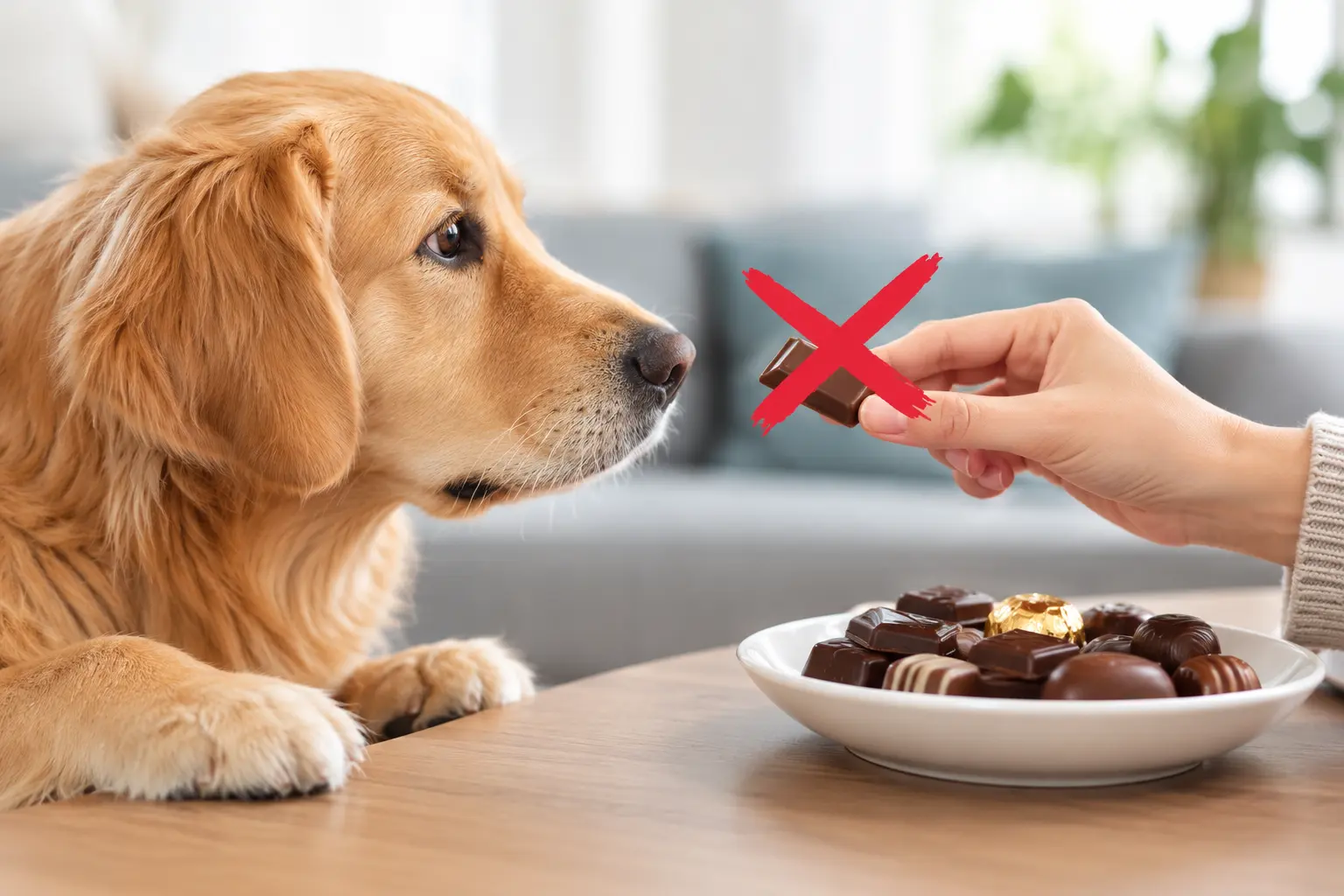
My Dog Ate Chocolate: What to Do Right Now
- By Dr Sam DVM
If your dog ate chocolate, call your veterinarian immediately, even if your dog seems fine. Chocolate contains theobromine and caffeine, which can be toxic to dogs. The risk depends on the type and amount of chocolate eaten and your dog’s size. Remove any remaining chocolate, keep the packaging, and note when your dog ate it. Do not try to make your dog vomit unless your veterinarian specifically instructs you to.
My dog ate chocolate, what do I do?
- Move your dog away and pick up whatever is left, wrappers included.
- Work out what kind of chocolate it was, roughly how much, and when. Keep the packaging.
- Know your dog’s approximate weight.
- Call your vet right away, even if your dog seems completely fine. Signs often take hours to appear.
- Don’t try to make your dog vomit at home unless a veterinarian tells you to.
Early treatment is usually simpler and works best, which is why calling before signs appear matters so much.
How much chocolate is toxic to dogs?
The amount of chocolate that can harm a dog depends on the type of chocolate, the quantity eaten, and the dog’s size. Darker chocolate generally contains more theobromine, making it more dangerous than milk chocolate.
Here is how common types compare:
- Cocoa powder and unsweetened baking chocolate: These contain high concentrations of theobromine and can be particularly dangerous.
- Dark and semisweet chocolate: These can cause poisoning even in relatively small amounts, especially in smaller dogs.
- Milk chocolate: It contains less theobromine than dark chocolate, but larger amounts can still cause serious problems.
- White chocolate: It contains very little theobromine, but its high fat and sugar content can still cause digestive upset and may contribute to pancreatitis.
There is no single amount that is safe for every dog. For example, a few milk chocolate chips may pose a different risk to a large dog than a piece of baking chocolate would to a small dog.
Chocolate desserts can also contain other ingredients that are unsafe for pets. If your dog ate a brownie, cookie, or another baked treat, tell your veterinarian about any additional ingredients listed on the packaging.
If you are unsure how much chocolate your dog ate, do not try to calculate the risk yourself. Contact your veterinarian for advice.
What are the symptoms of chocolate poisoning in dogs?
Symptoms of chocolate poisoning often appear within 6 to 12 hours, although the timing can vary. In serious cases, symptoms may persist for a day or longer.
Watch your dog for the following signs:
- Vomiting or diarrhea
- Increased thirst and urination
- Restlessness, pacing, or unusual hyperactivity
- Panting or a rapid heartbeat
- Muscle tremors or difficulty walking
- Seizures or collapse
The severity of symptoms depends on the amount and type of chocolate consumed, as well as your dog’s individual health.
Tremors, seizures, collapse, or a racing heartbeat require urgent veterinary attention. Do not wait for symptoms to worsen before seeking help. Even if your dog appears normal, contact a veterinarian after a known chocolate ingestion.
You can also read our guide to urgent pet care near Langley to learn when a pet needs prompt veterinary attention and what to do before arriving at the clinic.
What if my dog ate sugar-free candy?
Sugar-free candy, chewing gum, and some baked goods may contain xylitol, a sweetener that is highly toxic to dogs. Xylitol can cause a sudden drop in blood sugar and, in some cases, liver damage. Signs can develop quickly.
Check the ingredient list for xylitol, which may also be listed as birch sugar. If your dog ate a product containing xylitol, contact your veterinarian immediately. Do not wait for symptoms to appear.
Keep the packaging so the veterinary team can identify the ingredients and estimate the amount consumed. Avoid giving food, medication, or home remedies unless your veterinarian provides specific instructions.
If you are concerned about a possible exposure to an unsafe food or ingredient, our pet food recalls and safety guide provides additional information and trusted resources for pet owners.
My dog ate a candy wrapper
If your dog ate a candy wrapper, foil, or a lollipop stick, the main concern is that the swallowed material could cause irritation or an intestinal blockage. The risk depends on the size and type of material swallowed, the amount, and your dog’s size.
Contact your veterinarian for advice, particularly if your dog swallowed several wrappers or a large piece of packaging.
Watch for warning signs such as:
- Repeated vomiting
- Loss of appetite
- Abdominal pain or tenderness
- Difficulty passing stool or straining
- Unusual tiredness
These signs can indicate a problem that needs veterinary assessment. Do not try to make your dog vomit to remove the wrapper unless your veterinarian specifically directs you to.
Also check what was inside the wrapper. If it contained chocolate or sugar-free candy, the ingredients may pose an additional risk
Can cats eat chocolate?
No. Chocolate is toxic to cats too, although chocolate ingestion is reported less frequently in cats than in dogs.
The risk depends on the type and amount of chocolate eaten. If your cat has eaten chocolate, contact your veterinarian promptly, even if there are no obvious symptoms.
Keep the packaging and provide details about the amount and type of chocolate, just as you would if a dog had eaten it.
How do I keep my dog out of the Halloween candy?
Halloween can make it easier for dogs to find chocolate and other unsafe treats around the house. A few simple precautions can help prevent accidental ingestion.
- Store candy in a closed cupboard or a secure container out of your dog’s reach.
- Ask children to sort their Halloween candy at a table rather than on the floor.
- Put wrappers, foil, and lollipop sticks straight into a lidded bin.
- Remind children and guests not to share candy with pets.
- Keep handbags, backpacks, and shopping bags containing sweets off the floor.
- Check the area after Halloween activities to make sure no candy has been left behind.
Remember that dogs can find food quickly, even when you are nearby. Keeping sweets secured is safer than relying on supervision alone.
Need a vet tonight in Surrey?
Mascot Animal Hospital is a locally owned veterinary clinic at 17767 64 Ave #109, Surrey, BC V3S 1Z2. We serve pet families across Surrey and nearby communities, including Cloverdale, Fleetwood, Langley Township, Walnut Grove, and Willoughby.
Our clinic is open daily from 8 AM to 11 PM, providing veterinary care for pets that need attention during those hours.
If your dog ate chocolate, call Mascot Animal Hospital at (604) 325-2200 for guidance on the next step. Calling ahead can help our team understand what happened and prepare for your arrival.
If your pet develops severe symptoms or needs care outside our opening hours, contact the nearest 24-hour emergency veterinary hospital. Do not delay seeking help while waiting for symptoms to improve.
Frequently asked questions
Is white chocolate safe for dogs?
White chocolate contains very little theobromine compared with darker chocolate. However, its fat and sugar content can still cause digestive upset, and large amounts may contribute to other health problems. Contact your veterinarian if your dog ate a significant amount.
My dog ate one chocolate chip. Will they be OK?
One milk chocolate chip may pose a low risk for many medium or large dogs, but the risk depends on the type of chocolate and the dog’s size. Contact your veterinarian with these details rather than assuming it is safe.
How long does chocolate stay in a dog’s system?
Theobromine is processed more slowly by dogs than caffeine is by humans. As a result, the effects of chocolate poisoning can last for a day or longer in serious cases. The duration depends on the amount consumed and the severity of the poisoning.
Should I make my dog throw up after eating chocolate?
No, not unless a veterinarian specifically instructs you to. Inducing vomiting at home can cause harm and is not appropriate in every situation. Contact your veterinarian immediately for advice.
Can chocolate cause pancreatitis in dogs?
Yes. Chocolate contains fat, and eating a large amount of high-fat food can contribute to pancreatitis in some dogs. This is separate from the toxic effects of theobromine. Watch for vomiting, abdominal discomfort, reduced appetite, or lethargy, and seek veterinary advice if these signs develop.
If your dog ate chocolate, do not wait for symptoms to appear. Contact your veterinarian, share the details of what your dog ate, and follow their instructions. Acting promptly is the safest way to protect your pet.