
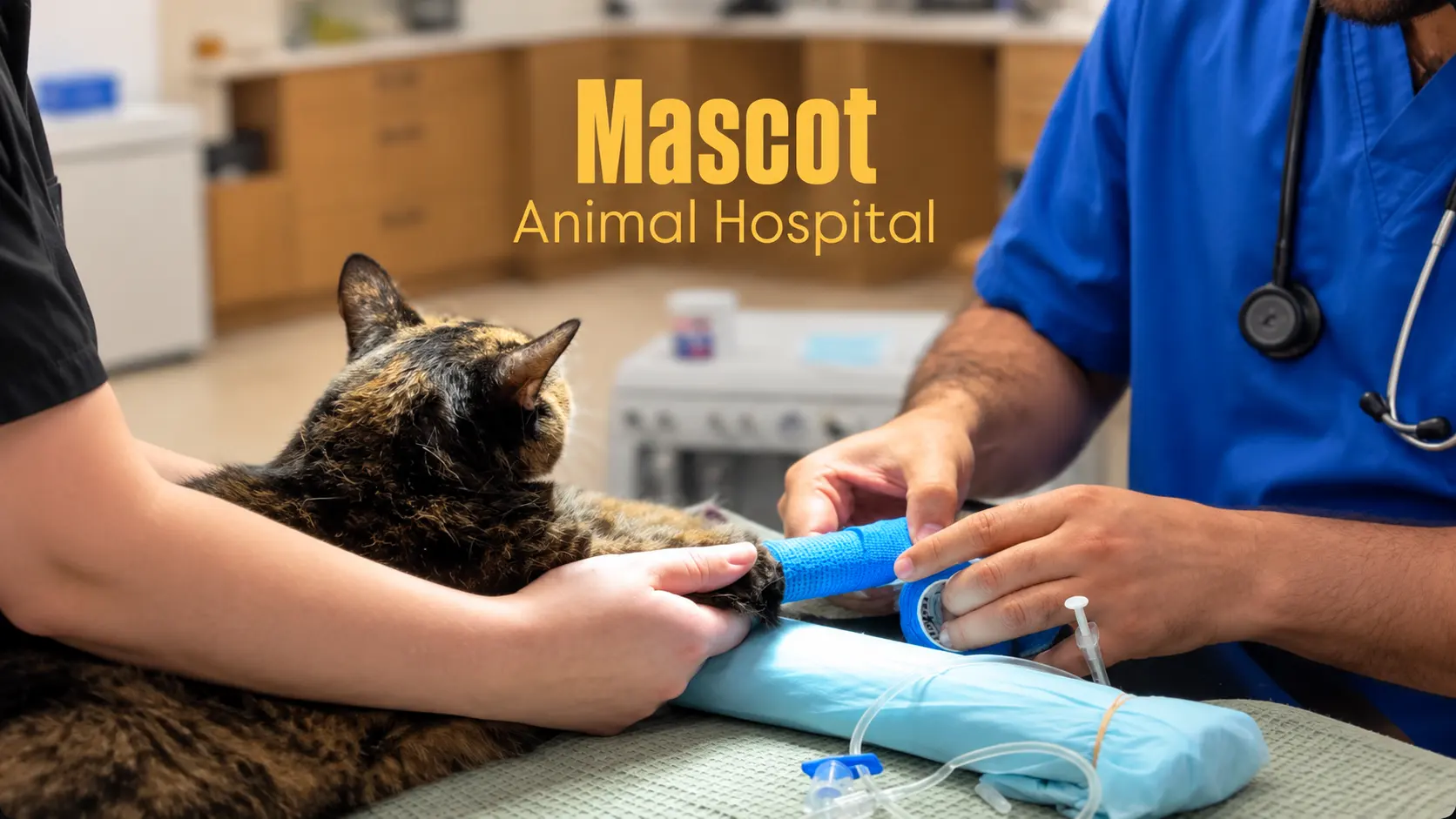
What Should You Keep in a Pet First-Aid Kit at Home? A Vet’s Essential Checklist
- By admin
By the Veterinary Team at Mascot Animal Hospital, Surrey, BC
A useful pet first-aid kit covers four things – wound-care supplies, basic handling tools, a digital thermometer, and your pet’s key contact numbers and medical records. It will not replace an exam by a veterinarian, but a well-organized kit helps you respond calmly and safely in the first few minutes after an injury, before you can get your pet to a clinic.
This checklist reflects what our veterinary team keeps on hand at Mascot Animal Hospital and recommends to the cat and dog owners we see across Surrey. Use it as a starting point, and check with your own veterinarian before adding any medication to your kit.
In This Article
- Why a First-Aid Kit Matters for Cats and Dogs
- Wound Care Supplies to Include
- Tools for Handling and Transport
- Medications and Substances: Use With Caution
- Documents and Contact Information to Keep With the Kit
- Where to Store the Kit and How Often to Check It
- Recognizing When First Aid Isn’t Enough
- About Mascot Animal Hospital
- Frequently Asked Questions
- Conclusion
Why a First-Aid Kit Matters for Cats and Dogs
Injuries and minor medical scares tend to happen at inconvenient times – evenings, weekends, or on a walk far from home. A first-aid kit does not treat the underlying problem, but it buys time and reduces the risk of a small injury getting worse before you reach a veterinarian.
Situations where a kit is commonly used include:
Situations where a kit is commonly used include:
- A cut paw pad, torn nail, or minor laceration
- A bee or wasp sting with mild swelling
- A minor burn or scrape from a hot surface
- Suspected ingestion of something the pet shouldn’t have eaten
- Overheating during exercise or hot weather
First aid stabilizes. It does not replace a veterinary exam for anything beyond a minor, surface-level injury.
Wound Care Supplies to Include
Most home first-aid kits are built around wound management, since cuts, scrapes, and torn nails are the most common reason owners reach for one.
| Item | Purpose |
|---|---|
| Sterile gauze pads and rolls | Wrap wounds; can double as an emergency muzzle in a pinch |
| Non-stick bandages or clean cloth strips | Control bleeding and protect the wound surface |
| Self-adhering wrap (vet wrap) | Secures a bandage without sticking to fur |
| Adhesive tape | Holds gauze and wrap in place |
| Sterile saline solution | Flushes debris from wounds and eyes |
| Blunt-tipped scissors | Trims fur or bandage material safely, away from skin |
| Fine-tipped tweezers | Removes splinters, debris, or an attached tick |
Bandaging Materials
Keep enough gauze and self-adhering wrap for at least two full bandage changes. Vet wrap is useful because it does not stick to fur the way standard medical tape does, which makes removal far less stressful for the pet.
Cleaning and Antiseptic Supplies
Saline solution – the same type sold for contact lenses – is the safest general-purpose option for rinsing a wound or an irritated eye. Avoid reaching for hydrogen peroxide as a wound cleanser: it damages healthy tissue and slows healing, even though it has a separate, very specific use covered below.
Tools for Handling and Transport
An injured or frightened animal, even a normally gentle one, may struggle or snap. A few simple tools make handling safer for both the pet and the people helping it.
Restraint Tools
- A spare leash, collar, or harness
- A clean towel – especially useful for restraining or wrapping a cat
- A properly sized muzzle for dogs
Muzzle Use
A soft fabric or basket muzzle, sized to fit your dog, prevents bites while you assess or bandage an injury. It should be introduced calmly rather than forced on for the first time during an emergency, if that’s at all possible.
A Note on Muzzle Safety
Never muzzle a pet that is vomiting, retching, or having difficulty breathing – this can cause them to choke. If your pet is showing any of these signs, focus on getting them to a veterinarian rather than restraining the mouth.
Carriers and Transport Aids
A hard or soft carrier works well for cats and small dogs and limits movement that could worsen an injury. For a larger dog that cannot walk, a rigid board, sled, or sturdy blanket used as a sling can support the body during transport to the car.
Medications and Substances: Use With Caution
A handful of items in a pet first-aid kit are only meant to be used under direction from a veterinarian or a poison-control line – not on your own judgment in the moment.
- Digital thermometer – pet thermometers are used rectally; know your pet’s normal range before an emergency happens
- Eye dropper or needle-free syringe – for flushing a wound or giving an oral treatment as directed
- Water-based lubricant – protects the eyes or a wound surface during cleaning
- Milk of magnesia or activated charcoal – only if a veterinarian or poison-control specialist tells you to use it
- 3% hydrogen peroxide – used only to induce vomiting after suspected poisoning, and only on explicit instruction from a veterinarian or poison-control line; never applied to a wound
Never give a cat or dog human pain relievers such as ibuprofen, acetaminophen, or aspirin unless a veterinarian has specifically told you the dose. Several common human medications are toxic to pets even in small amounts.
Documents and Contact Information to Keep With the Kit
Supplies are only half the kit. Keep the following information stored alongside them, either on paper or saved to your phone:
- Your regular veterinarian’s phone number and address
- The nearest after-hours emergency veterinary clinic
- A poison-control hotline number
- A copy of your pet’s vaccination record and medical history
- A current photo of your pet
- A written list of current medications and doses
Where to Store the Kit and How Often to Check It
Store the kit in a waterproof box or bag, somewhere every household member can find it without searching. If you travel with your pet regularly, a smaller duplicate kit in the car is worth having.
Check the kit roughly every six months: replace anything expired or used, top up bandaging supplies, and update the medical record and photo if needed.
Recognizing When First Aid Isn't Enough
A first-aid kit is meant to stabilize your pet on the way to care, not to substitute for it. Call your veterinarian or an emergency clinic immediately if you notice any of the following:
- Bleeding that has not slowed after three minutes of firm, steady pressure
- Signs of heatstroke: rapid breathing or heavy panting, excessive drooling, weakness, confusion, vomiting or diarrhea, or gums that look pale, blue, or unusually dark
- Difficulty breathing or collapse
- A suspected broken bone or inability to bear weight
- A seizure, or suspected ingestion of something toxic
For step-by-step guidance on handling specific emergencies before you reach a clinic, the American Veterinary Medical Association’s pet first-aid guide is a reliable reference to keep bookmarked.
About Mascot Animal Hospital
Mascot Animal Hospital, based in Surrey, provides full-service veterinary care for cats and dogs. This checklist reflects the supplies our team commonly recommends to pet owners – it’s meant as a practical starting point, not a substitute for an in-person exam when your pet is unwell or injured.
Conclusion
A well-stocked first-aid kit will not replace a veterinary exam, but it can help you respond calmly and safely in the first few minutes after an injury. If your pet is bleeding heavily, showing signs of heatstroke, having trouble breathing, or may have swallowed something harmful, contact Mascot Animal Hospital or your nearest emergency veterinary clinic right away.
Frequently asked questions
What should always be in a basic pet first-aid kit?
At minimum: gauze, non-stick bandages, adhesive tape, saline solution, a digital thermometer, a muzzle, and your vet’s and poison control’s phone numbers.
Can I use hydrogen peroxide on my pet's wound?
No. Use saline solution to flush wounds. Hydrogen peroxide has a narrow, separate use — inducing vomiting after poisoning — and only when a veterinarian or poison-control specialist tells you to use it.
How often should I check my pet's first-aid kit?
About every six months — replace expired or used items and confirm your contact list and medical records are current.