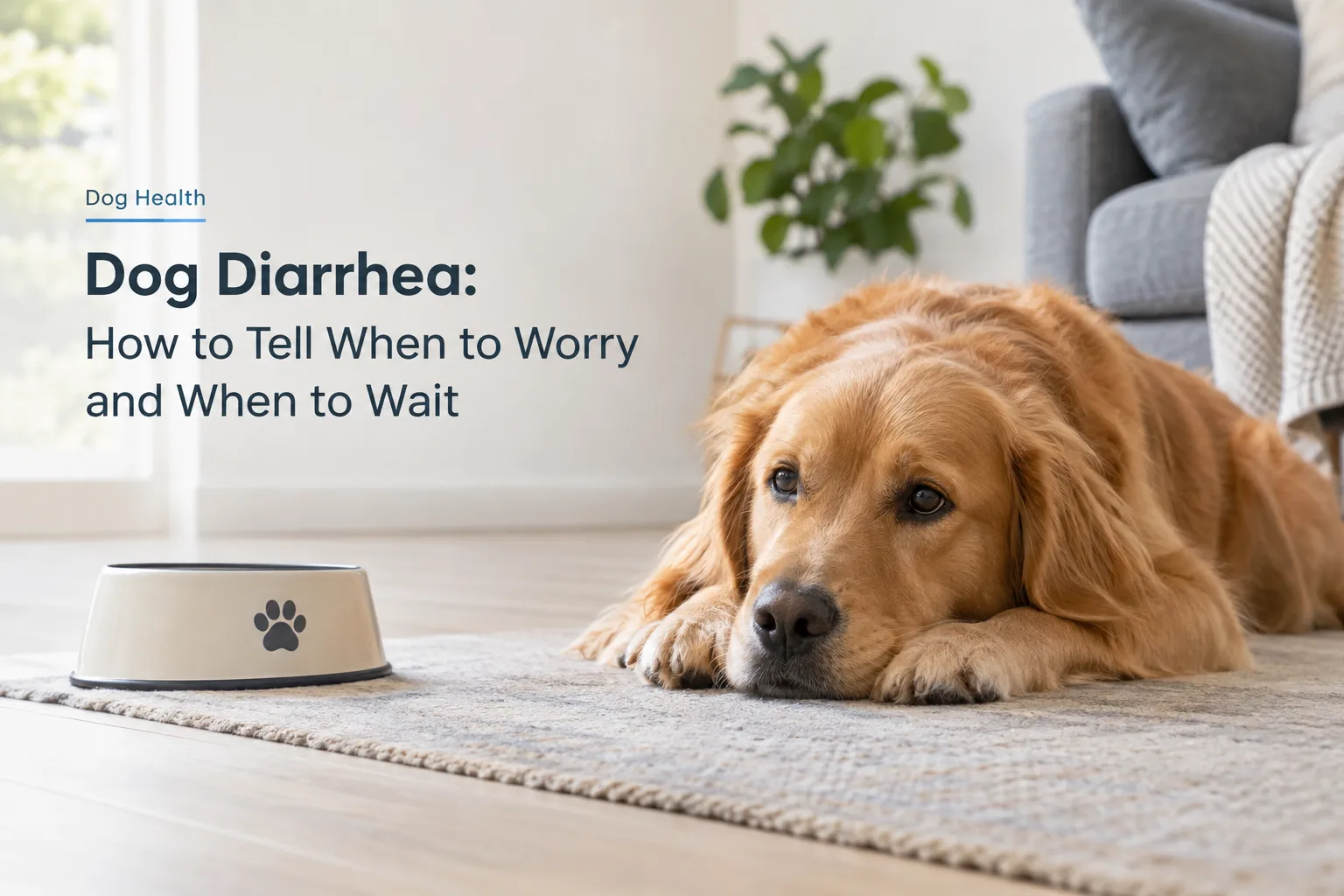
Dog Diarrhea: How to Tell When to Worry and When to Wait
- By admin
Most dog diarrhea clears up within 24 to 48 hours and can be watched at home if your dog is bright, eating and drinking normally. See a vet if it lasts longer than two days, or if it comes with vomiting, lethargy, blood, or belly pain. Puppies and senior dogs should be seen sooner, because they dehydrate faster.
Quick guide
| What you see | What it usually means | What to do |
|---|---|---|
| 1 to 2 loose stools, normal energy and appetite | Often a diet change or something eaten | Monitor at home |
| Diarrhea beyond 24 to 48 hours, or with vomiting | Needs a proper look | Book a vet visit |
| Blood, black tarry stool, repeated vomiting, sunken eyes | Possible emergency | Get care right away |
Table of Contents
- Common Causes of Dog Diarrhea
- When Dog Diarrhea Is Probably Minor
- Signs It’s Time to Call Your Vet
- When Dog Diarrhea Is an Emergency
- What Happens at the Vet
- Care in Surrey and Langley
- Frequently Asked Questions
- Final Thoughts
Common Causes of Dog Diarrhea
Diarrhea is a symptom, not a diagnosis. The cause can be simple or serious, so the details matter.
More common causes
- A sudden change in food
- Table scraps or fatty foods
- Eating something from the yard, garbage, or a walk
- Stress from travel, boarding, or a change in routine
Less common causes
- Intestinal parasites such as giardia or roundworms
- Bacterial or viral infections, including parvovirus in unvaccinated puppies
- Food allergies or intolerances
- Pancreatitis, inflammatory bowel disease, or other underlying conditions
Most cases of dog upset stomach come from the first list. The second list is why persistent diarrhea should not be ignored.
When Dog Diarrhea Is Probably Minor
You can usually monitor at home if your dog:
- Has one or two loose stools
- Is active, alert and eating normally
- Is drinking water as usual
- Has no blood, no vomiting and no signs of pain
- Recently had a diet change or ate something new
What helps at home
- Offer small portions of a bland, easily digestible diet for a day or two, such as plain boiled chicken and rice
- Keep fresh water available at all times
- Return to the regular diet gradually over several days
- Track how many loose stools your dog has and when
What to avoid
- Human anti-diarrheal medications unless your vet has approved them
- Fatty leftovers or new treats while the gut settles
Current guidance generally favours a bland diet over full fasting. Check with your vet first if your dog is a puppy, a senior, or has other symptoms.
Signs It's Time to Call Your Vet
Book a visit for dog diarrhea if your dog:
- Has diarrhea lasting more than 24 to 48 hours
- Seems tired or shows less interest in food
- Has vomiting along with diarrhea
- Is a puppy or a senior dog
- May have eaten something toxic or spoiled
- Has ongoing or repeated bouts of loose stool
Why age matters
- Puppies can dehydrate quickly, and diarrhea in an unvaccinated puppy should be checked promptly
- Senior dogs often have other health conditions that diarrhea can make worse
This is the point where dog diarrhea, when to see a vet stops being a guess. If you are unsure, a phone call is a reasonable first step.
When Dog Diarrhea Is an Emergency
Seek care immediately if your dog has:
- Diarrhea with visible blood, or black, tarry stool
- Repeated vomiting along with diarrhea
- Sunken eyes, dry or tacky gums, or extreme weakness
- A swollen or painful abdomen
- Known ingestion of a toxic substance
If your dog is showing these warning signs, learn more about when to seek urgent pet care
Puppies need a lower threshold for calling. If a young puppy has diarrhea and seems off, do not wait to see if it passes.
What happens at the vet
- History: We ask about diet, recent changes, environment, vaccination and other symptoms
- Physical exam: This includes checking hydration, gum color and abdominal comfort
- Testing when needed: A fecal test, bloodwork or imaging, depending on severity and duration
- Treatment: Most straightforward cases are managed with dietary changes and, if needed, medication, and settle within a few days
- Supportive care: Dogs that are dehydrated may need fluids
Care in Surrey and Langley
Mascot Animal Hospital is an Animal Clinic in Surrey, that sees dogs and cats for digestive concerns, from mild upset stomachs to cases that need diagnostics. If your dog’s diarrhea is not settling, a physical exam is the fastest way to rule out the causes that matter.
For a general overview of how digestive problems are assessed in dogs, the Merck Veterinary Manual’s pet owner guide to digestive disorders of dogs is a useful reference.
Frequently Asked Questions
Should I withhold food if my dog has diarrhea?
Current guidance generally favours a bland, easily digestible diet over full fasting. Check with your vet first, especially for puppies, seniors, or dogs with other symptoms.
Can stress cause diarrhea in dogs?
Yes. Travel, boarding and changes in routine are common, often overlooked triggers of short-term diarrhea in otherwise healthy dogs.
When does diarrhea become a parasite concern?
Ongoing or recurring diarrhea, especially in puppies or dogs with outdoor exposure, is usually checked with a fecal test to rule out intestinal parasites.
How long is too long for dog diarrhea?
More than 24 to 48 hours is the point to book a visit. Sooner applies if your dog is very young, older, or showing other symptoms.
Final Thoughts
Most dog diarrhea is mild and passes with simple care. The dogs that need help are the ones with symptoms that last, get worse, or come with vomiting, lethargy or blood. If you are unsure which category your dog falls into, it is always fine to ask.
If your dog in Surrey or Langley has diarrhea that is not improving, our veterinarian team at Mascot Animal Hospital can help. Book an appointment or call (604) 325-2200.