Recurring Ear Infections in Dogs: Why They Keep Coming Back
- By admin
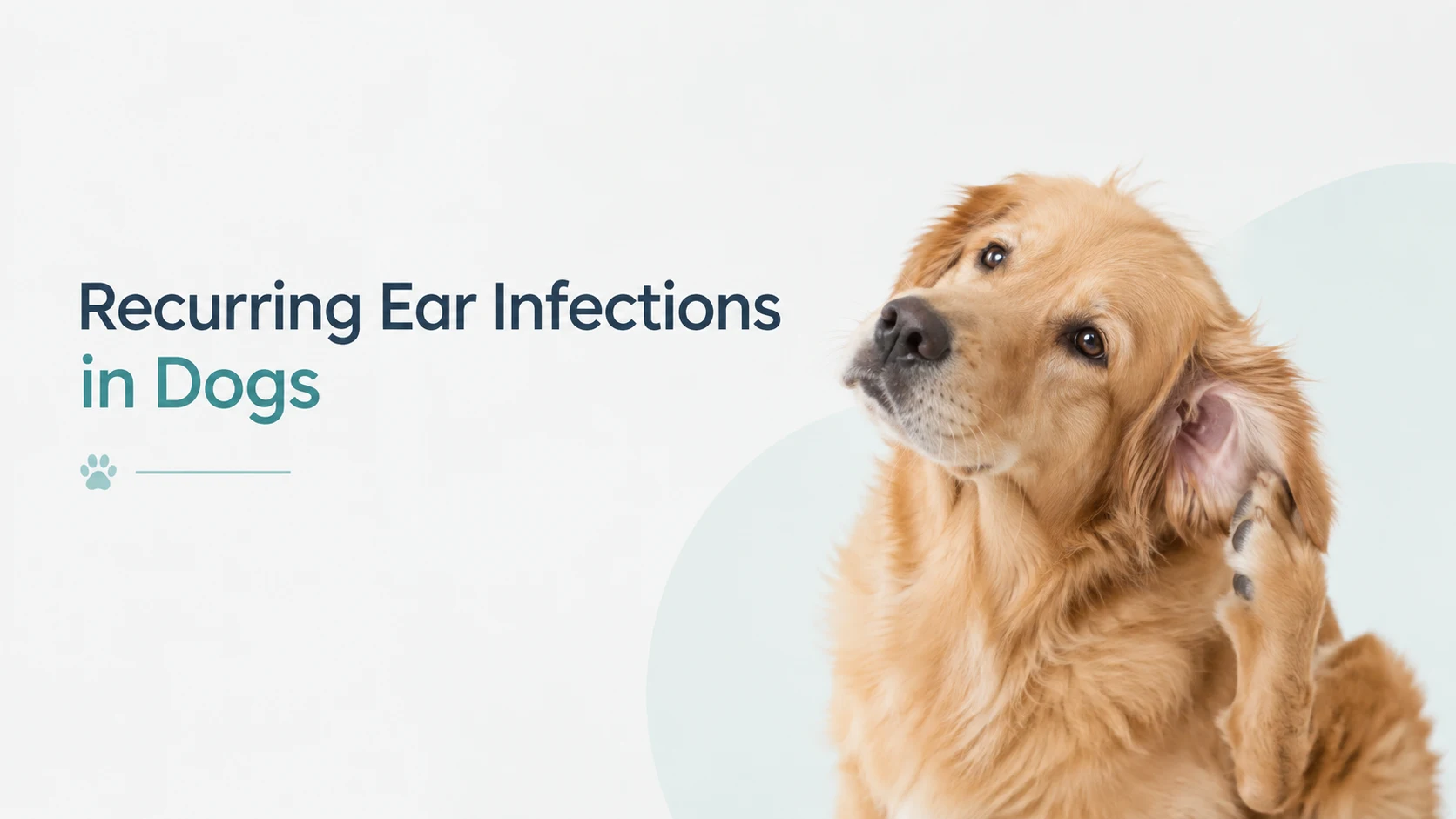
A dog’s ear infection that clears up and returns weeks or months later is rarely bad luck. In most cases, the medication resolved the symptoms but not the reason the ear became infected in the first place. Recurring infections point to an underlying cause that is still active, and finding that cause is what actually stops the cycle.
Key Takeaways
- An ear infection is usually a symptom of something else, not the problem itself.
- Allergies are the most common reason infections keep returning in dogs.
- Ear shape, hair growth, and moisture make some dogs more prone than others.
- Ear cytology helps identify whether bacteria, yeast, or both are involved.
- Long-term control depends on managing the underlying cause, not just the current flare-up.
Table of Contents
- Why Ear Infections Return in Dogs
- Common Underlying Causes of Chronic Otitis
- Dogs More Likely to Develop Recurring Infections
- Diagnosing and Managing Recurrent Ear Infections
- The Bottom Line
Why Ear Infections Return in Dogs
Veterinarians usually describe this condition as otitis externa, meaning inflammation of the outer ear canal. The bacteria and yeast involved are not foreign invaders; they normally live in the ear in small numbers. An infection develops when something disrupts that balance and lets them overgrow. Treating the overgrowth without addressing what disrupted the balance is why so many cases come back.
Veterinary dermatologists generally group the contributing factors into three categories:
- Primary causes: allergies, ear mites, foreign material, hormonal disorders.
- Predisposing factors: ear shape, hair inside the canal, frequent swimming or bathing.
- Perpetuating factors: chronic tissue changes, resistant bacteria, or treatment that was stopped too early.
A single round of ear drops can clear the primary infection while leaving the predisposing or perpetuating factors untouched, which sets the stage for the next flare-up.
Common Underlying Causes of Chronic Otitis
The table below outlines the causes seen most often in dogs with repeat ear infections.
| Cause | What It Looks Like | Why It Leads to Recurrence |
|---|---|---|
| Environmental or food allergies | Itchy, red ears; flare-ups that are seasonal or tied to diet | The allergic reaction keeps ear tissue inflamed even after the infection clears |
| Ear anatomy | Long, floppy, or narrow ear canals | Reduced airflow traps moisture and debris inside the canal |
| Moisture | Water left in the ear after baths or swimming | Creates a warm, damp environment that yeast and bacteria favor |
| Hormonal conditions | Hypothyroidism, Cushing’s disease | Alters skin and immune function, making infections harder to clear fully |
| Parasites or foreign material | Ear mites, grass awns, plant debris | Causes ongoing irritation that triggers secondary infection |
The Merck Veterinary Manual notes that ear infections in dogs can stem directly from parasites, allergies, foreign objects, yeast or bacterial overgrowth, or middle ear disease, and that ear shape can make certain dogs more prone to it. Their guidance is consistent with what we see clinically: unless every contributing cause is identified and addressed, the infection tends to return.
Dogs More Likely to Develop Recurring Infections
Any dog can develop an ear infection, but recurrence is more common in dogs that fall into one or more of these groups:
- Breeds with long, pendulous ears – Cocker Spaniels, Basset Hounds, Labrador Retrievers.
- Breeds with hair growing inside the ear canal – Poodles, Schnauzers, Bichon Frises.
- Dogs with a confirmed or suspected environmental or food allergy.
- Dogs that swim regularly or are bathed often without thorough ear drying.
- Senior dogs with an underlying hormonal condition such as hypothyroidism.
None of these traits guarantee an infection will recur, but they do mean less margin for error – moisture, allergens, or inflammation have an easier path to building up unnoticed.
Diagnosing and Managing Recurrent Ear Infections
Breaking the cycle usually involves a few consistent steps:
- Otoscopic exam to check the eardrum and look for foreign material or growths.
- Ear cytology – a swab examined under a microscope to confirm whether bacteria, yeast, or both are present.
- Culture and sensitivity testing when an infection has not responded to standard treatment.
- Addressing the underlying trigger, such as an allergy management plan, hormonal treatment, or a routine ear-cleaning schedule.
- A recheck exam after treatment to confirm the ear has actually cleared, not just improved.
At Mascot Animal Hospital, an animal hospital in Surrey, ear cytology is a standard part of any visit involving repeat symptoms, since it is often the only reliable way to tell whether a treatment plan needs to change rather than simply repeat.
The Bottom Line
An ear infection that keeps returning is the ear’s way of pointing to a problem that hasn’t been fully addressed yet. Identifying that underlying cause, rather than treating each flare-up in isolation, is what leads to lasting improvement.
If your dog’s ear infections keep coming back, book an exam so the underlying cause can be identified before it becomes a long-term issue.