
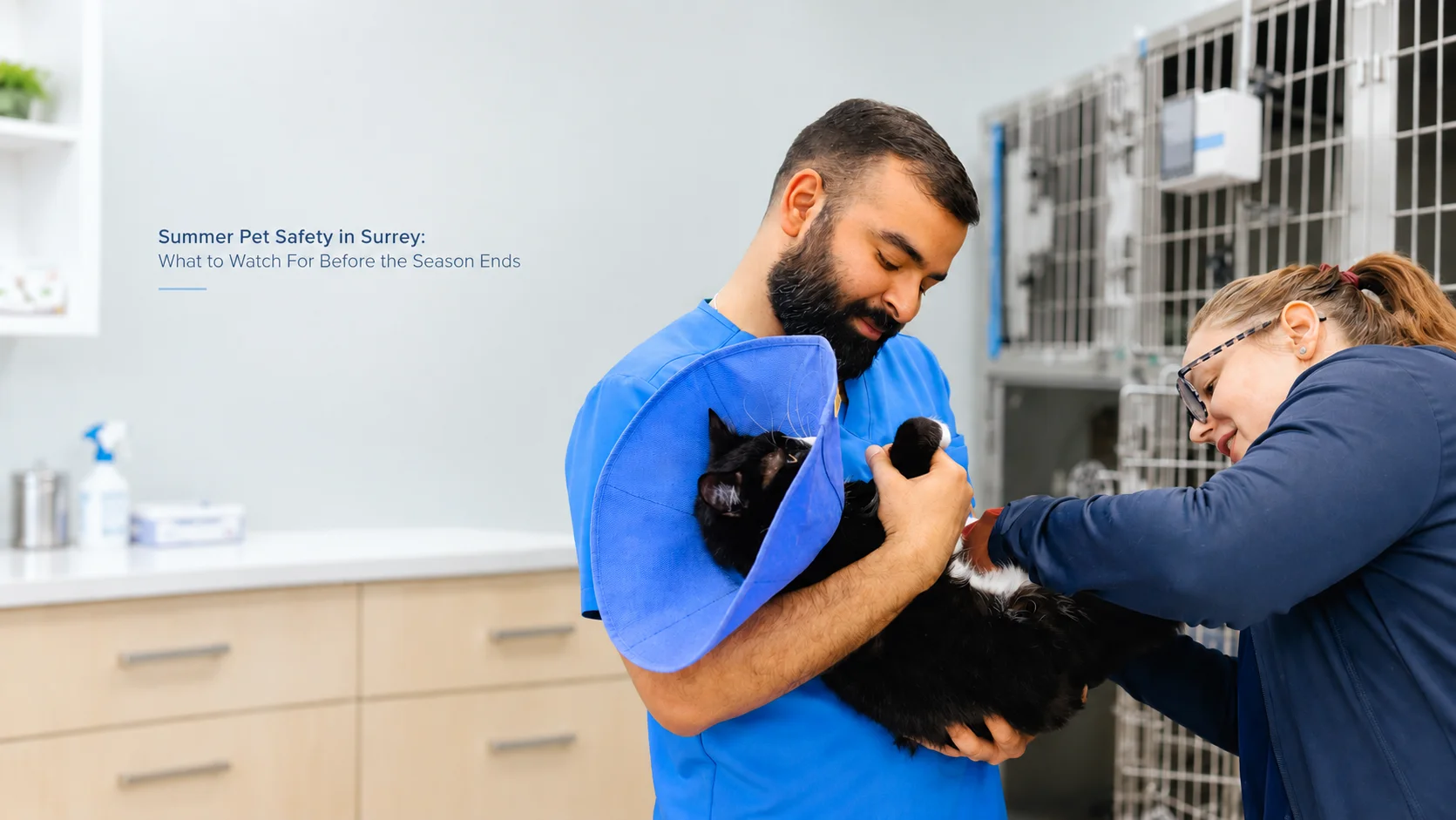
Summer Pet Safety in Surrey: What to Watch For Before the Season Ends
- By admin
The main late-summer risks for pets in Surrey are grass seeds, blue-green algae in lakes, wasp stings and lingering heat. Most are preventable with a quick check after outdoor time and a few adjustments to your routine. Knowing the early warning signs helps you act before a small problem becomes a costly one.
Table of Contents
- Grass Seeds and Foxtails
- Lake and Water Safety
- Wasp and Bee Stings
- Heat and Routine Changes
- Frequently Asked Questions
- Final Thoughts
Grass Seeds and Foxtails: The Hidden Late-Summer Hazard
Dry grass seeds can burrow into skin and cause painful infections that are easy to miss. Late summer is peak season for them.
Where they end up:
- Between the toes and paw pads
- Inside the ears
- Under the coat, especially armpits and groin
- Nose and eyes (less common, but serious)
Check after every walk in tall grass or on trails:
- Run your hands through the coat and part the fur
- Look between each toe
- Look inside the ear flaps
Signs one may be lodged:
- Sudden, focused licking or chewing at one spot
- Head shaking or tilting
- Limping after a walk
- A swelling or small draining wound, often on a paw
Grass seeds do not work themselves out on their own. They can travel deeper into tissue, so see a vet if you cannot remove one easily or the area looks swollen.
Lake and Water Safety: Algae Blooms and Ear Infections
Lakes near Surrey, including Cultus Lake, stay busy into the fall. Two issues come up most: algae and ear problems.
Blue-green algae (cyanobacteria)
- It is a type of bacteria that grows in warm, nutrient-rich, still water, usually in summer
- Water may look green, blue, brown or red, often with a scum on the surface or a swampy smell
- Dogs can be poisoned by drinking the water or licking their fur afterward
- Signs can start within 15 minutes to a few hours: vomiting, diarrhea, drooling, weakness, pale gums
- Some toxins affect the liver, others the nervous system, so this is an emergency
How to lower the risk:
- Skip water that looks scummy, discoloured or smells strong
- Follow any posted warning signs
- Do not let your dog drink from lakes or ponds
- Rinse your dog with clean water after swimming
Swimmer’s ear
- Repeated swimming traps moisture in the ear canal, which allows bacteria and yeast to grow
- Watch for scratching, head shaking, odour or redness
- Dry the ears gently after swimming
Wasp and Bee Stings: When Swelling Is Not Just Swelling
Wasps are especially active in late summer. Pets often get stung on the face or paws from sniffing or snapping at insects.
Usually manageable at home:
- Mild swelling at the sting site
- Brief pain or licking of the area
- A cool compress can help
Needs immediate veterinary care:
- Swelling of the face, muzzle or throat
- Difficulty breathing
- Hives across the body
- Repeated vomiting after a sting
- Weakness or collapse
Stings inside the mouth or throat can affect breathing quickly, so do not wait and watch.
Heat and Routine Changes at the End of Summer
Heat still matters
- Warm afternoons can still cause heat stroke
- Higher risk: short-nosed breeds, senior pets, overweight pets, dogs exercised at midday
- Walk early morning or evening
- Always carry water
- Never leave a pet in a parked car
Back-to-school routine changes
- Dogs used to extra summer attention may show stress when schedules shift
- Signs: barking, destructive chewing, pacing, accidents indoors, refusing food while alone
- Bring back short periods of alone time a week or two before the full schedule changes
- Keep departures and arrivals calm and low-key
Quick answers to common questions
How do I know if my dog has a grass seed stuck somewhere?
Look for sudden, focused licking or chewing at one spot, head shaking, or limping after time in tall grass. It usually appears suddenly, not gradually.
Is it safe for my dog to swim in lakes right now?
Often yes, but avoid any water that looks green, scummy or has visible algae. Rinse your dog with clean water afterward to reduce skin and ear irritation.
What should I do if my dog gets stung by a wasp?
Monitor mild swelling and apply a cold compress. Swelling around the face or mouth, trouble breathing or widespread hives needs prompt veterinary care.
What are the first signs of blue-green algae poisoning?
Vomiting, drooling, diarrhea and weakness are common early signs. If your dog was in or near affected water, get to a vet right away.
Final Thoughts: Keep Your Pet Safe as the Season Winds Down
Late-summer hazards in Surrey are mostly small and seasonal, but a few of them, such as algae exposure and allergic reactions, can turn serious fast. Check your pet after outdoor time, keep walks cooler, and ease them back into a normal routine.
If your pet shows any of the signs above, the veterinary team at Mascot Animal Hospital, an animal clinic in Surrey, can assess them and advise on next steps.
Book an appointment or call (604) 325-2200.